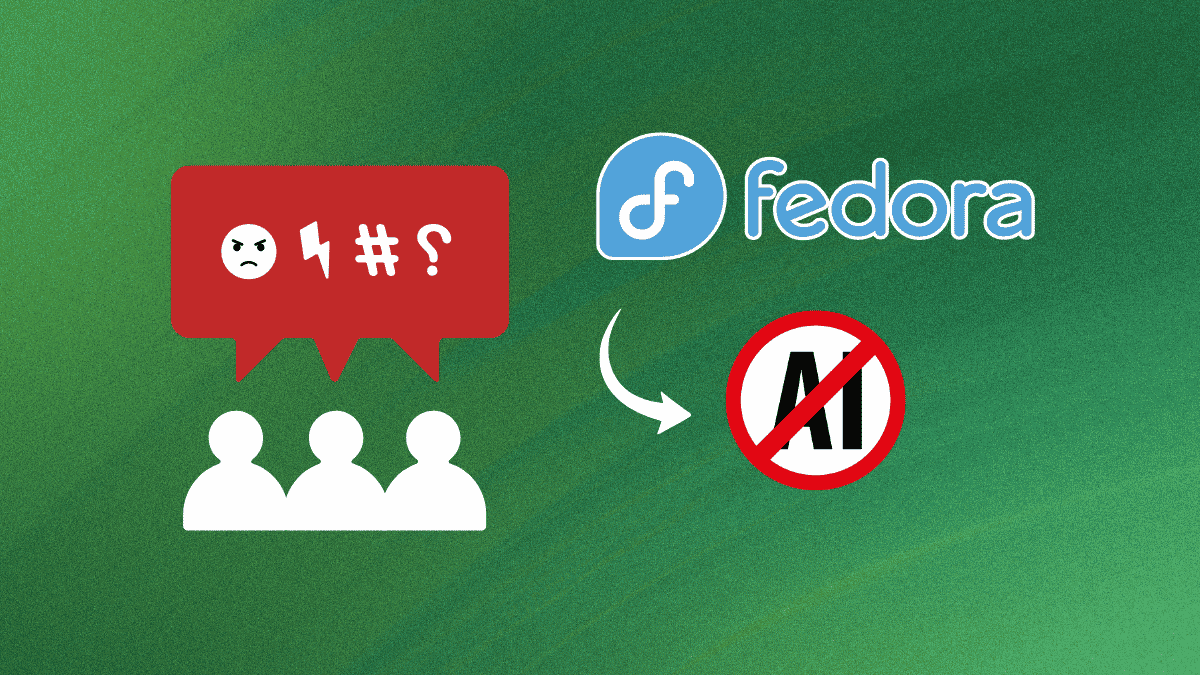
Fedora's ambitious plan to create an official AI developer desktop has hit an unexpected roadblock. What seemed like a straightforward initiative—championed by Red Hat engineer Gordon Messmer—has been put on hold after two Fedora Council members withdrew their support. The proposal aimed to deliver an Atomic Desktop with accelerated AI and machine learning support, covering developer tools, hardware enablement, and building a community around AI on Fedora. However, a groundswell of community pushback and internal miscommunications have forced a rethink. Here are the seven key developments that led to the initiative being blocked.
1. The Vision: A Fedora-First AI Workstation
Gordon Messmer's proposal, known as the Fedora AI Developer Desktop Initiative, sought to create a dedicated Fedora edition optimized for AI/ML workloads. The goal was to bundle tools like CUDA (for NVIDIA GPUs), ROCm (AMD), and oneAPI (Intel), alongside integrated development environments and container orchestration. This would give developers a ready-to-use platform for training models, running inference, and deploying AI applications. The initiative also aimed to foster a community of AI practitioners within the Fedora ecosystem, providing curated packages and documentation. However, as the proposal advanced, it became clear that the implementation details—especially around kernel modifications—would spark significant controversy.
2. A Promise of Unanimous Support… at First
During the May 6 Fedora Council meeting, all members initially voted in favor of the initiative. A lazy consensus window was opened until May 8 to allow absent members to weigh in, after which the decision would be ratified. This step is common in Fedora's governance to ensure broad agreement. Yet the process derailed when two council members, Justin Wheeler and Miro Hrončok, reversed their votes. Their changes reflected growing unease about the proposal's implications for Fedora's engineering processes and community values. The reversal underscore how even seemingly uncontroversial ideas can fracture under scrutiny.
3. Justin Wheeler's Concerns: The Kernel Shift
Council member Justin Wheeler (Jflory7) was the first to retract his approval, changing his vote to -1. He flagged the proposal's plan to use a Long Term Support (LTS) kernel as a "massive structural shift" that had not been coordinated with Fedora's legal and engineering teams. LTS kernels differ from Fedora's regular rapid-release kernel, potentially breaking compatibility with existing hardware or drivers. Additionally, Wheeler noted that feedback from kernel subject-matter experts had been overlooked. He also highlighted the Nova driver work (an open-source NVIDIA driver) as introducing both technical and legal complexities that required proper vetting. These issues, he argued, demanded thorough review before approval.
4. Miro Hrončok's Reversal: Community Sentiment
Following Wheeler's move, council member Miro Hrončok (churchyard) also changed his vote to -1. He explained that he initially assumed the proposal was purely additive—adding AI tools without altering core Fedora policies. But after witnessing the intense community backlash and reading the discussion thread, he realized he had underestimated the proposal's impact. As an elected representative of the Fedora community, Hrončok felt obligated to reflect that dissent. His reversal highlighted a crucial gap: the council had not fully gauged the community's pulse before moving forward. The next section details the specific criticisms that swayed him.
5. Pushback on CUDA and Proprietary Software
The discussion thread quickly swelled to over 180 replies, with many well-known Fedora contributors weighing in. Hans de Goede, from the packaging team, strongly criticized the proposal's emphasis on CUDA support (NVIDIA's proprietary AI acceleration framework). He argued that prioritizing CUDA "goes against Fedora's foundational commitment to free software". Instead, he advocated for focusing on open alternatives like AMD's ROCm and Intel's oneAPI. De Goede's stance resonated with others who feared that legitimizing CUDA would erode Fedora's identity as a champion of open-source software. The tension between pragmatism (supporting widely-used proprietary tools) and ideology (keeping Fedora fully free) fueled much of the controversy.

6. Questions About Identity and Vendor Influence
Other contributors raised even broader existential questions. Tim Flink questioned whether the initiative was essentially "a mechanism to get CUDA onto a Fedora-adjacent system" rather than a genuine effort to advance AI on Fedora. Neal Gompa echoed this, noting that Fedora has historically leveraged its strong stance against proprietary software to pressure vendors into providing open solutions. This proposal, Gompa argued, would undermine that leverage and could set a precedent for similar concessions. The fear was that Fedora's values—long a selling point for contributors—would be compromised in exchange for short-term developer convenience. The final section shows where things stand now.
7. Current Status and Next Steps
The initiative is now blocked in the council ticket, with an escalation deadline of May 22. Gordon Messmer has acknowledged the feedback and stated that a revised draft is forthcoming. He plans to address the kernel policy concerns, clarify the role of proprietary software, and incorporate community input. The communication breakdown was partly to blame: contributor Fabio Valentini of FESCo noted that he only learned about the vote by accidentally stumbling across the council meeting on Matrix. To prevent future rifts, the Fedora Council may need to improve transparency and solicitation of expert opinions earlier in the process. The outcome will test Fedora's ability to balance innovation with its founding principles.
In conclusion, the Fedora AI Developer Desktop Initiative's suspension reveals deep tensions within the Fedora community about its identity and priorities. While the desire to support AI developers is strong, many contributors believe that path should not sacrifice Fedora's commitment to free software. The upcoming revised proposal will need to find a middle ground—perhaps by emphasizing open alternatives while still offering a path for proprietary tools under clear guidelines. For now, the community watches closely, knowing that the decision will shape Fedora's role in the AI era.