Colin Angle, the mastermind behind the Roomba's global success, isn't done reinventing home robotics. After 25 years of making vacuuming autonomous, he's now turning his attention to something far more personal: a soft, four-legged AI companion designed to be your constant, affectionate shadow. This prototype, covered in plush fabric and packed with sensors, aims to forge an emotional bond with users—potentially even rivaling the role of a pet. Here are 10 key insights into this groundbreaking project.
1. The Visionary Behind the Roomba's Legacy
Colin Angle co-founded iRobot in 1990, and for the next quarter-century, he drove the Roomba from a quirky gadget to a household staple. Under his leadership, the Roomba became the best-selling home robot, proving that autonomous cleaning could be both practical and popular. Now, with his new venture, Angle is leveraging that same engineering prowess to tackle an entirely different challenge: creating a robot that doesn't just clean, but connects emotionally.
2. From Vacuum Cleaner to Emotional Companion
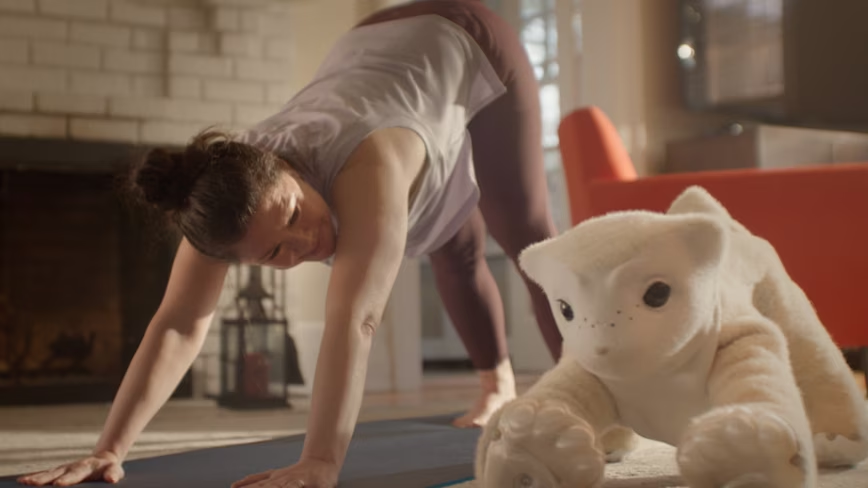
The jump from a disc-shaped vacuum to a plush, four-legged robot may seem vast, but Angle sees a natural progression. The Roomba taught him that for robots to succeed at home, they must be unobtrusive and reliable. His new companion applies those lessons to social interaction. Instead of cleaning carpets, it aims to offer comfort and presence—a pet-like experience without the need for feeding or vet visits.
3. Designed to Be Soft and Approachable
A key differentiator is the robot's covering: plush fabric that invites touch and cuddling. The prototype sports a rounded, animal-like body with four legs, covered in a material that feels warm and soft. This design choice is deliberate—Angle wants to break the stereotype of cold, metallic robots. The goal is to make users feel safe and comforted when interacting with the machine, much like they would with a stuffed animal or a small dog.
4. How It Follows You Around
Using a combination of cameras, depth sensors, and AI, the robot can track a person's location within the home. It learns the layout of rooms and can follow its owner from the kitchen to the living room without bumping into furniture. Unlike a Roomba that cleans in a pattern, this robot prioritizes staying close to its human companion, creating a sense of constant companionship.
5. Adapting to Your Daily Habits
The robot doesn't just follow you blindly—it learns your routines. Over time, it recognizes when you typically wake up, eat meals, or wind down for the evening. It can adjust its behavior accordingly, such as staying quiet during your focused work hours or becoming more playful when you're relaxing. This adaptive intelligence makes it feel more like a living creature than a pre-programmed machine.
6. Making You Feel Something
Angle's ultimate goal is to engineer an emotional connection. The robot uses subtle movements, eye-like displays, and responsive vocalizations to convey moods. When you pet it, it might purr or nuzzle. If you're sad, it might lean in gently. These cues are designed to trigger the same affection responses humans have with pets, potentially reducing loneliness and providing emotional support.

7. Could It Really Replace Your Dog?
The provocative idea of replacing a pet sparks debate. The robot offers advantages: no need for walks, feeding, or veterinary care. It won't shed hair or cause allergies. But can it truly replicate the unconditional love and unpredictability of a living animal? Angle believes that for some people—especially those with busy lifestyles or allergies—the robot could serve as a satisfying alternative, though he acknowledges it's not a perfect substitute.
8. The Technology Under the Plush
Beneath the soft exterior lies a sophisticated AI system. The robot is equipped with onboard processors to handle real-time navigation, object recognition, and natural language processing. It can understand simple commands like "come here" or "stay." Machine learning algorithms enable it to improve its interactions over time, making it more attuned to individual owners. The goal is to create a robot that feels genuinely intelligent and responsive.
9. Challenges on the Road to Production
Taking this prototype to market won't be easy. Battery life must be long enough for all-day companionship without constant recharging. The plush cover needs to be durable and washable. And the price point must be accessible—Angle hasn't announced a cost yet, but comparable social robots have failed due to high prices. Additionally, earning consumer trust after privacy scandals with smart home devices is crucial; the robot's cameras and microphones could raise concerns.
10. The Future of Home Robotics: Beyond Cleaning
Angle's plush robot signals a shift in home robotics from utilitarian tasks to emotionally supportive roles. If successful, it could open the door for a new generation of robots designed for companionship, elder care, and therapy. The Roomba proved that robots can handle chores; this next step suggests they might also handle hearts. Whether or not it replaces your dog, it certainly expands what we expect from the machines in our homes.
Colin Angle's latest venture is more than a tech novelty—it's a vision of how robots might integrate into our emotional lives. By combining soft design with adaptive AI, he's aiming for something no vacuum ever could: a genuine bond. The prototype still has hurdles to overcome, but if history is any guide, counting Angle out would be a mistake. The future of home robotics may just be a little softer.