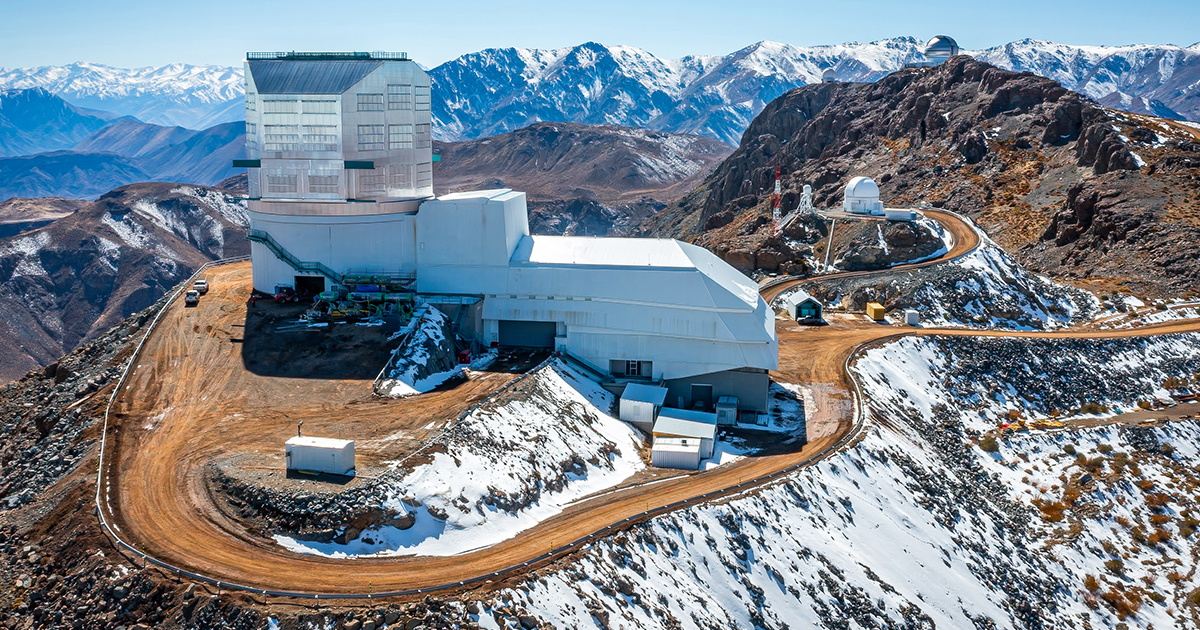
Perched high in the Chilean Atacama Desert, the Vera C. Rubin Observatory is poised to revolutionize our view of the dynamic universe. Originally conceived in the mid-1990s as the Dark Matter Telescope, this state-of-the-art facility will scan the entire visible sky every few nights for a decade, capturing unprecedented detail of transient and moving objects. From city-block-sized asteroids to failed supernovae and interstellar interlopers, Rubin promises a treasure trove of discoveries.
A Telescope Built for Change
The Rubin Observatory’s core mission is simple yet ambitious: to photograph the entire southern sky repeatedly using a massive 8.4-meter mirror and a 3.2-gigapixel camera—the largest digital camera ever built for astronomy. This relentless cadence will produce about 15 terabytes of data per night, creating a vast archive of cosmic motion and change.
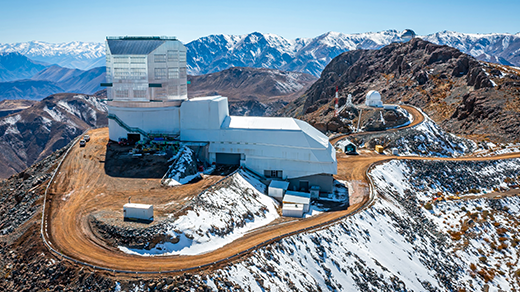
Unlike traditional observatories that focus on specific targets, Rubin will act as a cosmic surveillance system, detecting everything from near-Earth objects to distant supernovae. Its unique ability to detect faint, fast-moving objects makes it ideal for tracking the most elusive visitors in our solar system and beyond.
Tracking Skyscraper-Size Asteroids
One of Rubin’s most critical tasks is identifying potentially hazardous asteroids larger than 140 meters—objects capable of devastating regional destruction if they struck Earth. Current surveys have found only about 40% of these large near-Earth objects (NEOs). Rubin will dramatically accelerate discovery, expected to find up to 90% of skyscraper-size asteroids within its first few years of operation.
The telescope’s wide field of view and rapid scanning allow it to detect these dark, fast-moving rocks as they reflect sunlight against the blackness of space. By tracking their orbits over multiple nights, astronomers can determine which ones pose a genuine threat—and plan possible deflection missions if needed.
Beyond safety, these discoveries will also shed light on the formation of our solar system. Asteroids are primordial leftovers, and their composition and orbits tell us about the early building blocks of planets. Rubin’s deep imaging will reveal new populations of asteroids lurking in the inner solar system and even beyond Jupiter.
Stellar Ghosts: Failed Supernovae and the End of Stars
Not all massive stars end in brilliant explosions. Some simply collapse directly into black holes with little or no visible fireworks—a phenomenon known as a “failed supernova.” These cosmic disappearances are notoriously hard to catch because they produce no bright flash. Rubin’s unique ability to repeatedly image the same patches of sky will allow astronomers to spot stars that vanish without a trace.
Failed supernovae are key to understanding how the largest stars—those over 20 times the Sun’s mass—end their lives. By comparing before-and-after images, Rubin will identify candidates where a massive star seems to have gone missing, then follow up with other telescopes to confirm the presence of a newly formed black hole.
This technique has already succeeded with a handful of objects, but Rubin is expected to boost the discovery rate by hundreds. Each confirmed event provides critical data on black hole formation and the limits of stellar stability.
Interstellar Visitors: Asteroids from Afar
In 2017, the first confirmed interstellar object, ‘Oumuamua, breezed through our solar system. Two years later, 2I/Borisov followed. These visitors from other star systems amazed astronomers but also posed puzzles about their origins and composition. Rubin will be instrumental in finding many more such objects—up to several per year, by some estimates.
The telescope’s rapid sky survey is perfectly suited to detect these faint, high-speed interlopers. Unlike comets and asteroids born in our own solar system, interstellar objects often have unusual orbits—sometimes hyperbolic paths indicating they are just passing through. Rubin will catalog their trajectories and physical properties, building the first statistical sample of alien planetary building blocks.
This data will help answer fundamental questions: How many planetary systems eject material into the galaxy? What is the average composition of those ejecta? And could interstellar objects ever carry microbial life between stars?
Beyond the Big Three
While asteroids, failed supernovae, and interstellar visitors grab headlines, Rubin will revolutionize dozens of other fields. It will map the Milky Way’s structure, discover exoplanets via microlensing, probe the nature of dark energy through supernovae catalogs, and monitor variable stars and black hole flares.
What Does ‘Failed Supernova’ Actually Mean?
A failed supernova occurs when a massive star’s core collapses, but the resulting shock wave fails to blow off the outer layers. Instead, the star simply sinks into a newly formed black hole. Astronomers call this a “stellar implosion” and it is expected to be the fate of about 5–10% of very massive stars. Rubin will be the first to systematically hunt these elusive events.
When Will Rubin Begin Operations?
The observatory is currently in its final commissioning phase, with first public data expected in 2024. Once fully operational, it will generate alerts within 60 seconds of detecting a transient object, allowing other telescopes worldwide to follow up immediately. This rapid-response capability is critical for capturing fast-evolving events like supernovae and interstellar visitors.
A New Era of Discovery
The Vera C. Rubin Observatory is more than a sky survey—it’s a time machine for the universe’s dynamic processes. By repeatedly scanning the heavens, it will capture the changing cosmos in motion, from tiny asteroids to colossal stellar deaths and mysterious travelers from other star systems. The next decade promises an avalanche of data and a fresh perspective on our place in the galaxy.
For more on the telescope’s design and legacy, explore the Rubin Observatory official site.